LA IMAGEN ROTA

A BILINGUAL PAGE TO COLLECT AND DISCUSS COMMENTS ABOUT FILMS, THEATER AND ART AND SOME POLITICS. ENGLISH/SPANISH

Thursday, November 5, 2015

THE BROKEN IMAGE


In 1959, one of the first acts introduced by the Revolutionary Government of Cuba was the establishment of the Cuban Film Institute (ICAIC) which promoted the development of the arts and cinema on the island. State sponsorship opened the door to filmmakers and provided entertainment for the population. However, such good intentions on the part of the Revolution meant sacrifices for the artists.
After the invasion of the Bay of Pigs, Castro's Revolution became socialist and the Communist ideology began to rule the nation. Disagreements between groups of artists and intellectuals with the Government generated an ideological opposition that ended in 1962 with the First Educational and Cultural Congress. At this convention, Fidel Castro defined his political policy towards artists and intellectuals: "With the Revolution, everything...against the Revolution, nothing". This dogmatic dictatorial statement forcibly removed from the game all those who had differing opinions about the cultural program as well as those who were non-committal. Many liberal artists where condemned to silence, while others were forced to seek asylum. The most unfortunate ended up in prison.
A militant cinema was made to promote the Revolution and the advantages of the Socialist system. Cuban films were shown in the most remote places of the island and the people received them with great pleasure. Other Latin American filmmakers, inspired by the Cuban cinema, spread a trend of political documentaries. Cuban cinema turned into an ideological weapon for leftist liberation movements around the world while becoming a frequent winner of international awards.
An extremist government position appeared in the mid-1960's and focused upon those artists and intellectuals who were not considered favorable to the system. Many of them were persecuted as "anti-social elitists" and were forced into labor camps known as UMAP (Military Unit Production Aid).
After this persecution, filmmakers residing in Cuba became more cautious, fulfilling the government's artistic and cultural requirements. Nevertheless, many of their works were gradually affected by censorship. Many scripts were re-written and films re-edited or simply banned or confiscated. As a result of these curbs, three generations of filmmakers abandoned the country seeking freedom of speech abroad. Yet they left a broken image behind, an interrupted flow of creativity which some were able to rescue but others were not.
The Broken Image is a 46 minute documentary film that gathers the most representative exiled Cuban filmmakers, who will recount their personal experiences about having to abandon their work and start a new life away from their country, culture and natural environment. They will also express their ideas on filmmaking in a free context, as well as in a repressive society.
The Broken Image will develop as a journey that will take the viewer from past memories into the present, re-establishing the identity of those filmmakers in exile. This documentary film will exhibit an overview of that fragmented image before it is forgotten or sadly disappears.
Interviews with the participants from the cities where they now live, will let us know about their dreams and realities. Rescued clips of their films and photographs will stand as vivid examples of their lives and cinematography.
The Broken Image aspires to be a tribute to all those who wanted to create a cinema free of dogmatism and suffered of silence and intolerance.

Thursday, October 22, 2015

EL REGRESO A ÍTACA

Por Sergio Giral
A lo largo de la historia de la humanidad es comprobable el deslumbramiento por todo lo nuevo, lo que cambia  y parece ser diferente. Esa exaltación del intelecto y los sentidos resulta inexplicable para aquellos que por mucho tiempo han permanecido en guardia sobre lo que merece atención y aquellos que han sufrido algún tipo de escarnio, digamos de forma cursi, en carne propia. Una vez visitando en campo de concentración y exterminio de Buchenwald en Weimar, Alemania, presencia un grupo de visitantes de tercera edad depositando flores junto a un monumento y pregunté. Se me explicó que se trataba de sobrevivientes del campo que ofrecían tributo a sus familiares desaparecidos en el holocausto de ese lugar.  Desconozco si familiares de desaparecidos en las estepas siberianas regresaron en busca de algún recuerdo familiar o memorizar la condena de la subversión.   Todos salvos y sanos y pensé que a pesar del sufrimiento padecido el ser humano es capaz de seguir viviendo y regresar al lugar de los hechos. Otros que en realidad solo fueron saltimbanquis de algún régimen opresor, regresan entusiasmado por los nuevos aires, creyendo que sus desavenencias, conocida o no, serán perdonadas u olvidadas por los señores del yunque. Algunos, animados por la innovación, se lanzan a nuevas experiencias en campos una vez minado para ellos, esperando la complacencia y el perdón monástico. También están los filibusteros, tránsfugas y buscadores de oro. Y creo que los peores son los inconscientes, los que nunca supieron, a los que nunca les interesó, los que nunca tomaron en serio la posibilidad de regresar bajo cualquier nuevo orden, cualquier nuevo combate.  Los visitantes al campo de concentración y exterminio de Buchenwald en Weimar, Alemania, no habían olvidado lo padecido por ellos y sus seres queridos, es por eso que regresaban a poner flores. Los demás son turistas de paso, titiriteros de mala muerte, starlettes y ególatras que necesitan de un nuevo escenario donde la memoria haya sido borrada.    

Friday, January 16, 2015

THE DISSIDENT MOVEMENTS AND THE RESOURCES TO THE METHOD.
By Sergio Giral

For more than a lustrum the Castro regime has generated a consistent opponent dissident movement, many of its members have been killed in front of the firing squad and their names have remained anonymous; others have suffered imprisonment and abuse for decades. Each new opposition voice has been stifled and repressed behind the bars of a jail or beating, spitted and dragged through the streets of the cities. These men and women who have paid the price of rebellion have a name and a story.                                                                                                                                    
Pedro Luis Boitel Abraham, prisoner of conscience who held a hunger strike to protest the mistreatment received in the capital's prison El Castillo del Principe. Boitel was denied medical care despite personalities from exile and human rights organizations sent cables to the Human Rights Commission of the UN and the International Red Cross so that saved his life. His immolation concluded 53 days after he began their protest. It was the death that put an end on 24 May 1972.                                      
On March 15, 1990, Jorge Luis Garcia Perez aka Antúnez, made a political harangue against the interests of the people and the state, demanding reforms like those made in Eastern Europe. Antunez was arrested by members of the National Police and taken to the Department of State Security where he was instructed on enemy propaganda and sent to prison on June 15, 1990. Under physical and mental torture Antunez did not abandon his ideal and continued to advocate for the cessation of persecution and imprisonment of human rights activists and the urgent process of radical political and social reforms. Antunez was released in April 2007 after 17 years and 38 days of political imprisonment.                                                      
During the Black Spring in 2003, the Cuban government arrested 75 human rights defenders and independent journalists accusing them of "acts against the independence or the territorial integrity of the state, illegal organizations accepting money from the United States Interest Section in Havana and of terrorist activities. Orlando Zapata Tamayo, a Cuban Mason and member of the Alternative Republican Movement National Civic Resistance Committee, was one of activists arrested and sentenced to three years for contempt, public disorder and later increased to 36 years convicted of acts of defiance in prison. He stopped eating foods on December 3 to protest against the repeated beatings he suffered by guards and other abuses.  On February 2010, he died in prison after fasting for more than 80 days.  
   Dr. Oscar Elias Biscet, a physician president of of the Lawton Foundation for  Human Rights is one of the 75 dissidents imprisoned in 2003 by the Cuban authorities.. Biscet was violently arrested and beaten while discussing a petition of Human Rights with 16 other dissidents, condemned to 25 years sentence for "counter-revolutionary activities" and being kept in an infrahuman prison cell and finally freed in 2011.     From 2005 to today, 97 documented deaths of prisoners in Cuba have resulted from hunger strike, killings by guards, alleged suicides, and lack of medical care in protest of prison conditions under the Castro regime.
 Guillermo Fariñas, an independent journalist who has been involved in a peaceful campaign for freedom of expression in Cuba, started a hunger strike that lasted 4 months calling for the release of prisoners of conscience. Fariñas was awarded the Andrei Sakharov Prize for Freedom of Thought by the European Parliament.                                                                                             
Ladies in White are spouses, mothers and daughters of those men and women who have been arrested for exerting the freedom of expression and to obtain the Human Righs in Cuba. For their political integrity Ladies in White were awarded the Sakharov Prize for Freedom of thought in 2005. Opposite to this recognition mobs have attacked the Ladies in White, yelling insults at them and assisting the police to throw them into police buses. Laura Pollán who founded the dissident group after her husband was jailed in a 2003, died on 2011. Berta Soler substituted Pollan in the leading of this courageous movement. 
  Many are the resources to the method, many slogans and new voices are rising with righteous demands to achieve the Humans Rights, but do not to relegate these pages of value enrolling the names of brave Cubans who have sacrificed their freedom and their lives and those who continue fighting for human rights and democracy in Cuba.   


Tuesday, January 6, 2015

EROSTRATO


 «Se descubrió que un hombre había planeado incendiar el templo de Diana en Éfeso, de tal modo que por la destrucción del más bello de los edificios su nombre sería conocido en el mundo entero». Valerio Máximo:

Monday, December 8, 2014

ACTRESS IN MY FILMS

                                                            ALINA SANCHEZ
ELVIRA VALDES
ALINA RODRIGUEZ
DAISY GRANADOS
MARGARITA BALBOA
SUSANA PEREZ
ROSA FORNES
ASSENECH RODRIGUEZ
ISABEL MORENO
MERCEDES PLANAS  (AFRICA)
JUANITA BARO
HELENA HUERTA


Saturday, October 11, 2014

THE INVISIBLE COLOR

As one of the founding fathers of Afro-Cuban cinema, Sergio Giral is helping bring the black Cuban experience onto the screen.  Karen Juanita Carrillo, bfm  May/June 2006 
1959
DOCUMENTARY STATEMENT
The Invisible Color documentary investigates the black Cuban experience in United State and Miami Dade County in particular, since the first wave of political refugees in the 1959 revolutionary aftermath to today, tracks its presence throughout the region, and highlights its contribution to Miami’s civic culture through testimonies and visual documentation.


1980
While any visitor to Cuba will notice the ubiquitous presence of Afro-descendants everywhere, black Cubans are invisible in the biggest Cuban enclave outside Cuba: South Florida. The Miami exile is white. Although there was about a 10% of Cubans of color in the pre-1990s exile waves, only a tiny fraction of them stayed in Miami, where non-white Cubans made only a 2% of the total. The result is that the face of Cuban exile is white.
1994
DOCUMENTARY GOALS 
The Invisible Color testimony the experience through the eyes of Black Cubans everyday life in Miami Dade County in particular. Interviews, film clips, archive footage and any possible media will be used to highlight our mayor occupations and contribution to society as well life in contemporary Cuba. Members of the South Florida community, Blacks and Whites, experts on the subject, artists, Scientifics as well as everyday people will document the social and cultural aspects of Black Cuban heritage. In sum, The Invisible Color will be more than just an hour-long documentary on the role, identity and contributions of Black Cubans in American popular culture have either acknowledged or ignore from a historical as well as contemporary point of view.

Tuesday, September 9, 2014

The Cuban syndrome or what goes around comes around.

Por Sergio Giral
Toma 1:

El periodo de la república cubana trajo consigo una serie de atractivos emblemáticos que lo caracterizaron como uno de los períodos  más atractivos para el turismo internacional. Una capital llena de emociones caribeñas de rasgos europeizantes y  un África punzante. Los visitantes se movían seguros y divertidos por las calles de la ciudad en busca de sus preferidos platos existenciales, ya sea un bar americano, una barra criolla, un restaurant gourmet, una fonda de chinos, un puesto de fritas, una prostituta barata, una prostituta elegante, un guateque guajiro, un toque de santo o un puro cazador. Se compraban artículos de piel de cocodrilos en las tiendas de El Prado y el último grito de la moda francesa en El Encanto. Algunos viajaban al interior en busca de la paz campesina y los románticos paisajes de un valle, una cascada, un pueblo detenido en el tiempo y el espacio, montañas de aborígenes caribeños, playas exclusivas, playas púbicas, un pase de coca, un suspiro de marihuana o un simple saludable bienestar. La capital también albergaba celebridades literarias, hollywoodenses, pintores y toda la fauna del arte contemporáneo del momento.  Los centros nocturnos empequeñecían el recuerdo del cabaret alemán y se disputaban un espacio junto al Lido y al Moulin Rouge. Luces, colores, mujeres de carnes firmes y la música. La música es el talismán de la herencia cubana que permite romper los avatares más poderosos y convertirlos en aliados. Música que escapa de instrumentos mujer y tambor africano. Había más, los ciudadanos de la capital. Los ciudadanos de la capital llevaban con orgullo su distintivo personal, ya sea racial, económico o social. Los visitantes se movían en su espacio propio y casualmente eran interferidos por limosneros y prostitutas de a pie. Un pueblo que no veía en el visitante una ventaja, una solución, un respiro y un anhelo. Los ciudadanos se movían en su propio espacio y así los visitantes.

Toma 2:
Sucedió que cansados de sus visitantes el pueblo se enroló en una aventura xenofóbica y los arrojó del templo, los sustituyó por campesinos barbudos y militantes arribistas. Luego vinieron los otros, los de lejos, con un lenguaje nunca antes escuchado, costumbres nunca antes practicadas, olores nunca antes percibidos. Esos nuevos visitantes no encontraron un bar americano, una barra criolla, un restaurant gourmet, una fonda de chinos, un puesto de fritas, una prostituta barata, una prostituta elegante, un guateque guajiro, un toque de santo. No se compraron artículos de piel de cocodrilos en las tiendas de El Prado y el último grito de la moda francesa en El Encanto. No viajaban al interior en busca de la paz campesina y los románticos paisajes de un valle, una cascada, un pueblo detenido en el tiempo y el espacio, montañas de aborígenes caribeños, playas exclusivas, playas púbicas, un pase de coca, un suspiro de marihuana o un simple saludable bienestar. No acudían a centros nocturnos de luces, colores, mujeres de carnes firmes y la música. No lo encontraron ni lo buscaron porque no existían y también porque no lo conocían. Los descendientes de Raskolnikov y los Karamazovs se mantuvieron en ghettos  especiales donde comían sus platos tradicionales, bebían su alcohol tradicional, fumaban sus hierbas tradicionales y sobretodo no se juntaban con los ciudadanos de la capital. Otros llegaron de El Sur en una estampida huyendo del desprecio dictatorial para caer en otro desprecio dictatorial que los protegió, alimentó, albergó, privilegió sobre los ciudadanos. Un día todos se marcharon y la capital quedó derrumbada, agotada, incrédula, irreverente, violada, machucada por los visitantes.     

Toma 3:
Página en construcción.    


Monday, September 1, 2014

THE INVISIBLE COLOR


The invisible color is a living testimonial of the experience through the eyes of Black Cubans everyday life in Miami Dade County in particular, highlighting their mayor occupations and contribution to society as well their life in contemporary Cuba. Cubans and their descendants represent the largest demographic group of Hispanic in South Florida, yet the Black Cubans has gone largely unnoticed due to the Census have limited the reporting them as just as “Hispanic,” Without specific data on Cubans of African descendants, it seems that the only way to know the role of this invisible group plays in our society is to let our own daily experience be the judge. Members of the South Florida community, Blacks and Whites, Scholar, experts on the subject will document the social and cultural aspects of Black Cuban heritage.
In sum, The Invisible Color it's more than just an hour-long documentary on the role, identity and contributions of Black Cubans in American popular culture have either acknowledged or ignore from a historical as well as contemporary point of view.

Saturday, August 2, 2014

Tuesday, April 5, 2011

THE INVISIBLE COLOR
By Sergio Giral
Over decade Latino immigration have caused a major shift in the demographic complexion of Unites State. Caribbean, Central and South Americans are expanding and contributing to the social and cultural composition in the country. Among these growing group of Latinos who have played a significant role in this complexion are – the Black Latinos – who has gone largely unnoticed, not only to White and Black Americans, but also to Latino Americans whose own social structure historically has alienated them as a result of race. If we focus on the Black Latino experience, we will find that many immigrants and exiles had settled where topographical, cultural and language similarities afforded them the easiest opportunity for assimilation into U.S. society. Assimilation, however, proved more to difficult to attain for Black and mestizo, especially in a traditional racial social structure. However, by 1965, the United States’ history of slavery, segregation and racism was overcome by the achievements of its Civil Rights Movement. Focusing on Cuba’s experience, the first Cuban leap to Miami after Fidel Castro’s victory in late 1958 was wealthy and well-educated white elite who spoke English and slipped easily into Miami society. However, by 1965, the United States’ history of slavery, segregation and racism was superseded to by the achievements of its Civil Rights Movement. As a result, the potential for racial equality in the United States soon became a contributing factor in many Black Cubans’ decision to immigrate to the United States in the Mariel’s migration and the 1995 boatlift explosion preferable to cities like New York, where other Black Latinos groups had established a large and important presence. Popular culture may provide some insight, especially if we examine television – the epitome of an American popular culture. It is elementary to acknowledge that television’s publicity spots and commercials are targeted to attract consumers. And soap operas pursue ratings to accomplish sponsors investment, yet Latino TV producers avoid the Black subject, mimicking Hollywood on the 50’s when film studios cast Gina Lollobrigida, an Italian actress to play Queen of Sheba on “Salomon and Sheba” or in “Veracruz” where Sara Montiel, an Spaniard actress, plays the role of an American Indian girl, the possible closer look alike to an average American spectator.
   Gina Lollobrigida in Solomon and Sheba                   Sara Montiel in Veracruz
This schematic tradition survive on the Latino media and suppresses the possibility of a love story where both characters are Black, a sitcom like “Meet the Browns” or a talk show led by a Latino Black anchor such as Oprah in the American TV network, or a Tyler Perry’s film “For Colored Girls”, just to cite some examples. Even Colombia and Brazil who have a large Black population and are great soap opera providers, Black characters are reserved for maids, chauffeurs and slaves or exceptionally with Tais Araujo in “Xica da Silva” a 1966 Brazilian soap opera where a Black actress played the leading role. Or taking the case of Cuba, with a Socialist regimen that presumes of abolishing racial discrimination where soap operas suffers a lack of Black actors in a country with a 60% of Black population approximately. But once again the absence of a Black identity (excluding sports and entertainment), appears to prove that Black Latinos are a non-existent consumer demographic group, and leads one to think that the group is viewed as largely insignificant or obviously invisible from days of slavery to their significance in contemporary American society.
Alina Sánchez in The Other Francisco 1974

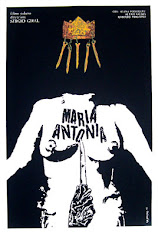
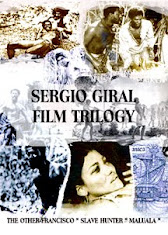
On my films I always have turn the camera point of view to the background, where slaves, maids and working class Black characters traditionally move along. From “The Other Francisco” that tells the impossible love story between two Black slaves; “Slaves Hunter”, “Maluala” and “Placido” that count the ordeal of Blacks and mestizos in search for freedom and equality in Cuba 19th. Century; “Maria Antonia” portraying the tragedy of a “mulata:” in Cuban Republican times; “Glass Roof” that denounces the privileges of white workers in a Socialist Cuba with a 60% of Black and mulatto population; to a more recent film “Two Times Ana” depicting the dreams and reality of a “colored” market cashier in Miami, my films have intended to contribute to unveil this invisible color on the screens.
Elvira Valdés in Two Times Ana 2011
Today seems hard to accomplish and to fill a void in the recording and reporting of the Black Latino experience as represented in both U.S. Census data and American popular culture as even Census data fails to accurately report upon the percentage of the count that was actually multiracial or specifically, Black Latinos. Without specific data on Latinos of African descendants, it seems that the only way to assess the role, which this invisible group plays in our society today, is let our own daily experience be the judge. The future of the Latino-American community depends on confronting the racial schisms that have been subordinated and denied for generations.

Lecture giving March 29th, 2011 at Markette University, Milwaukee, WI.  

Thursday, August 4, 2011

THE INVISIBLE COLOR: A REVIEW OF OLD PAPERS.

By Sergio Giral
Over the last decades Hispanic immigration have caused a major shift in the demographic complexion of United State. In Miami-Dade County, this complexion is over 70% Hispanic -- with immigrants of Cuban descent making up the largest demographic, while an influx of Central and South Americans is both expanding and fragmenting the composition of Hispanics in the country. There is a growing group of Hispanics who have also played a significant role in this complexion – the Black Cubans – who has gone largely unnoticed, not only to White and Black Americans, but also to Hispanic Americans whose own social structure historically has alienated them as a result of race.
For a better understanding of this racial social structure, it is necessary to trace the history of Black Cubans from the days of the African slave trade to the Cuba. It is estimated that the number of slaves landing alive in Cuba over the whole period (1521-1870s) was over a million, almost one tenth of all slaves in the Americas. They were brought mostly in the 1800s. According to 1827 Census the Black and mulatto slaves and free came to compose approximately 60 % of the population while Whites, mostly from Spanish descendant a 40%.. The Haiti revolution in 1794, discourage whites Cubans to fight for independence from Spain and produced a campaign of fear “miedo al negro”, that was a determinative factor to delay the independence war until 1868, when the rest of Latin American countries were already freed.
Antonio Maceo
When Cubans began the Independence War against Spain, Black Cubans - free or slaves - strongly supported the revolt. Racial divisions and lack of unified leadership undermined these efforts until the rise of Independence heroes, the poet Jose Marti, and the mulatto liberator warrior, Antonio Maceo. For centuries, Black Cubans had played a recognized role in the struggle for independence in a truly multiracial term. The Cuban cigar workers, who arrived in Tampa from Key West in 1886, are an example of this historical continuity. About 15% of the Cuban population of Ybor City and West Tampa would be Black Cubans found them segregated from white Cubans, and separated by Black-Americans by language, culture and religion.
José Martí
During his stay in Ybor City, Jose Marti declared the necessity of a united front beyond racial differences to liberate Cuba from the colonial Spanish dominium, declaring that being Cuban was "more than white, more than black”. This alliance it’s proved by an incident in which Martí narrowly escaped poisoning by Spanish agents, and found protection and friendship under the roof of Ruperto and Paulina Pedroso, prominent Black-Cubans. For her aid to the cause, Paulina has been called the "second mother" to the apostle.
José Martí con tabaqueros cubanos en Tampa, Florida.
Patriotic organizations as Club Nacional Cubano founded by Jose Ramon Safeliz in 1890 and Sociedad la Union Marti-Maceo founded by Black-Cubans patriots in Tampa in 1900, were composed of whites and s members with not distinction of race, however, the group split along racial lines due to the pressures of the segregated South. Cubans in Ybor City and West Tampa suffered the consequences of Jim Crow Laws. When US retreated from Cuba and the island had its own constitution that included the Platt amendment, the new administration favored Spanish immigration pursuing to whitening the Island. Between 1900 and 1930 close to one million Spaniard arrived from Spain, and according to 1899 Census, Black and mestizo population decreased to 35%. Only a few outstanding Black-Cubans who distinguished themselves by very exceptional military abilities or Western educational standards had access to white privileged circles. Black Cubans usually worked in cane fields or as construction workers in urban areas, and almost always maintained low-income professions, which further deprived them of any social stay in Cuba.
Mariel boat lift to Miami
After Fidel Castro’s victory in late 1958, the first Cuban leap to Miami was wealthy and well-educated white elite who spoke English and slipped easily into Miami society. However, by 1965, the United States’ history of slavery, segregation and racism was superseded to by the achievements of its Civil Rights Movement. As a result, the potential for racial equality in the United States soon became a contributing factor in many Black Cubans’ decision to immigrate to the United States. Cubans living under a totalitarian regime have developed a system of survival for their physical and psychological needs according to what restrictions imposes the State. Consider well the Black population. For many years the Black Cubans in Cuba have been wrongly perceived by the exiled Cuban community as supporters of the Castro’s regime, due to significant given the recurrent myth that Fidel Castro has enhanced Cubans’ quality of life. Opposite to this believe, Black Cubans suffer discrimination and are considered alleged delinquents and drifters by the authorities. The penal population is almost exclusively Black. Currently, blacks and mulattos continue to be discriminated against in government leadership positions, even though they make up over half the population where only around 15 blacks hold seats in the 150-member Central Committee. Blacks and mulattos hold only six seats in Castro's military leadership and has practically no blacks in its ranks. Black Cubans have less access to dollars, since Cuban exiles that support their families in Cuba are predominantly white. These facts provoked a significant number of Black Cubans in the Mariel’s migration and the 1995 boatlift explosion. If we focus on Black Cuban experience, we will find that many Cuban exiles, and mestizo Cubans settled in South Florida where topographical, cultural and language similarities afforded them the easiest opportunity for assimilation into U.S. society. Assimilation, however, proved more to difficult to attain for Black and mestizo Cubans, especially in the traditional, racial social structure of South Florida and Miami-Dade County, in particular. To this end, many Black Cubans migrated to cities, like New York, where other Black Latinos groups had established a large and important presence.
Orlando Zapate Tamayo
The Cuban dissident movement has been also considered largely "white," with a few notable exceptions. However, Black and mestizo Cubans have played a significant role within the strong dissident movement in the Island. Among the many prisoners of conscience in Cuba, Jorge Luis Garcia Perez “Antunez” is an undeniable example of courage, suffering harassment and torture for his hunger strikes demanding Human Rights and political freedom. On February 2010, Orlando Zapata Tamayo, a Cuban Mason and political activist died in prison after fasting for more than 80 days. Guillermo Fariñas, an independent journalist who has been involved in a peaceful campaign for freedom of expression in Cuba, started a hunger strike that lasted 4 months calling for the release of prisoners of conscience. Fariñas was awarded the Andrei Sakharov Prize for Freedom of Thought by the European Parliament and Cuban authorities denied him the exit permit needed to travel outside the country. Dr. Oscar Elias Biscet, one of the 75 dissidents imprisoned in 2003 by the Cuban authorities, is a Black Cuban. Biscet was violently arrested and beaten while discussing a petition of Human Rights with16 other dissidents, condemned to 25 years sentence for "counter-revolutionary activities" and being kept in an infrahuman prison cell and finally freed in 2011. These bave dissidenets are   Black Cubans.
Gina Lollobrigida as The Quenn of  Sheba
Popular culture may provide some insight, especially if we examine television – the epitome of an American popular culture. It is elementary to acknowledge that television’s publicity spots and commercials are targeted to attract consumers. And soap operas pursue ratings to accomplish sponsors investment, yet Latino TV producers avoid the Black subject, mimicking Hollywood on the 50’s when film studios cast Gina Lollobrigida, an Italian actress to play Queen of Sheba on “Salomon and Sheba” or in “Veracruz” where Sara Montiel, an Spaniard actress, plays the role of an American Indian girl, the possible closer look alike to an average American spectator. This schematic tradition survive on the Latino media and suppresses the possibility of a love story where both characters are Black, a sitcom like “The Cosby Show”, “Meet the Browns” or a talk show led by a Latino Black anchor such as Wendy Williams, Tyra or Oprah in the American TV network, or a Tyler Perry’s film “For Colored Girls”, just to cite few examples. In the Latino soap operas Black and Native Latin American characters are reserved for maids, chauffeurs and slaves, exceptionally with Brazil who exceptionally portraits Black characters since Tais Araujo played the leading role in “Xica da Silva” a 1966 soap opera. Or taking the case of Cuba, with a Socialist regimen that presumes of abolishing racial discrimination where soap operas suffers a lack of Black actors in a country with a 60% of Black population approximately. Not to mention Mexico, with a 60% of mestizo population and none ethnic representation on the media.
Samuel Claxton in Maluala
On my films I always have turn the camera point of view to the background, where slaves, maids and working class Black characters traditionally move along. From “The Other Francisco” that tells the impossible love story between two Black slaves; “Slaves Hunter”, “Maluala” and “Placido” that count the ordeal of Blacks and mestizos in search for freedom and equality in Cuba 19th Century; “Maria Antonia” portraying the tragedy of a “mulata:” in Cuban Republican times; “Glass Roof” that denounces the privileges of white workers in a Socialist Cuba with a 60% of Black and mulatto population; to a more recent film “Two Times Ana” depicting the dreams and reality of a “colored” market cashier in Miami, my films have intended to contribute to unveil this invisible color on the screens.                   
Celia Cruz a Black Cuban Idol
Due to today’s increasing of Blacks and mulattos in Cuba which possible could be compared to the 1836 Census, as a 51% mulatto (mixed white and black), 37% white, 11% black, and 1% Chinese, it’s difficult to assess the impact and role of Black Cubans in Miami Dade and South Florida from days of slavery to their significance in contemporary American society once Census data fails to accurately report upon them. In South Florida, for example, Hispanics represent 2.7 million, or 17% of Florida’s 15.9 million residents, but the 2000 census never reported on the percentage of the count that was actually multiracial or specifically, Black Cubans. Beginning with the 2000 Census, the federal government allowed people to choose more than one race. Until now, if a worker was Hispanic, reporting that worker's ethnicity was enough. The federal government now wants to know what race or races this Hispanic worker is. This even though the questionnaire, for the first time in its history, expanded the definition of race by allowing respondents to identify themselves with more than one race. In other words, the 2000 Census allowed for the counting of multiracial Hispanics, but limited the reporting of them as just “Hispanic.” Without specific data on Cubans of African descendants, it seems that the only way to assess the role, which this invisible group of Hispanics plays in our society today, is let our own daily experience be the judge. The future of Cuba and the Cuban-American community depends on confronting Cuban racial schisms that have been subordinated and denied for generations.